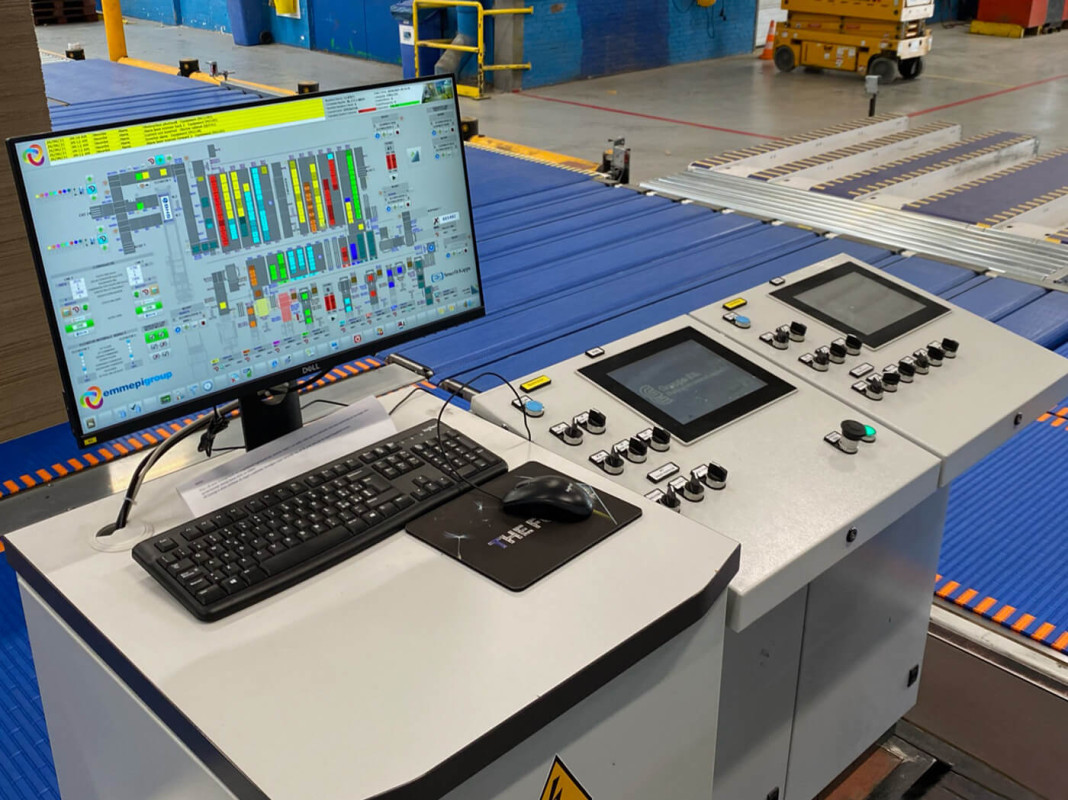
Supervision
Optimising industrial automation and materials handling in alignment with various ERP systems can be a significant challenge. This challenge can only be addressed through the implementation of automation systems that are not only efficient and fast, but also exceptionally robust. A failure in individual components can lead to issues or malfunctions that, in the worst-case scenario, could result in system downtime. However, by employing redundant components, this risk is significantly reduced.
It is also crucial to understand the complexity of automation systems. This complexity requires the system to be managed simultaneously from multiple operator stations by multiple employees. Data from different systems also needs to be monitored and evaluated by centralised management systems and people.
The strategy implemented by Emmepi Group to effectively address these challenges is the adoption of a client-server WinCC system featuring a redundant server. This setup significantly enhances system availability by enabling the parallel operation of two interconnected servers.
IT Infrastructure
IT infrastructure within factories is becoming more complex and vulnerable to failure (and subsequent recovery). There is a growing trend to opt for virtual servers instead of traditional physical servers. Emmepi Group can operate effectively in both scenarios, making decisions in collaboration with the client’s specialised IT professionals.
The challenges stem from the vast amounts of data being generated today, which necessitate the use of more than just the basic tools of an HMI system, such as alarm logging and user archives. These tools remain essential, but there is an increasing demand for real-time tracking data analysis, real-time trace data and the visualisation and analysis of big data tailored to each specific type of device.
In recent years Emmepi Group has collaborated with numerous companies globally, interfacing with a variety of ERP systems. This experience has allowed Emmepi Group to refine its data exchange processes by developing a dedicated software package. This package effectively utilises the most common technologies for data transfer, which include data exchange through TXT files, XML file integration, TCP/IP communication, OPC and table sharing on both internal and external databases.
Get in touch with us
CONTACT US